

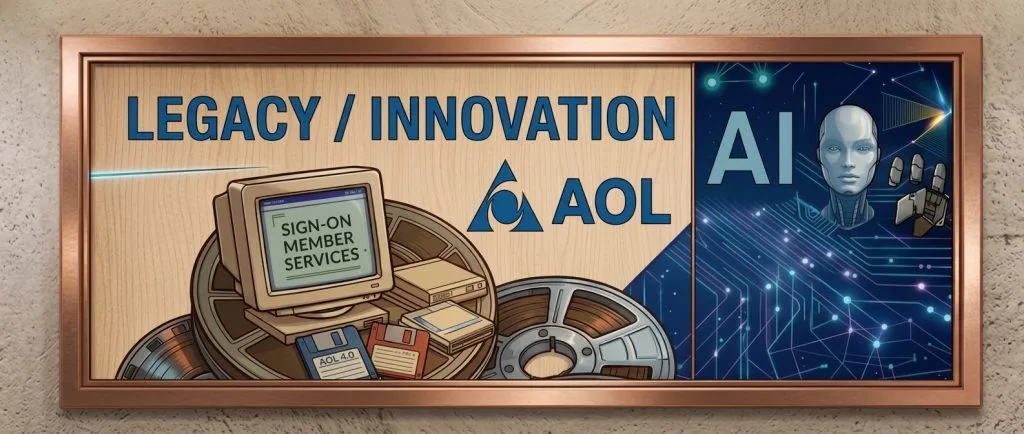
I still can’t believe I’m older than Google. At this point, I’m older than most apps, social media trends and probably three versions of technology that were invented while I was trying to remember my password. Does that scare me? Honestly, no. Maybe it’s because I work in technology or maybe it’s because millennials have already survived dial-up internet, Y2K panic, MySpace drama, floppy disks and enough “once-in-a-lifetime” disasters to last several lifetimes. Trust me, after hearing the AOL startup sound at full volume, very little shakes us anymore. That doesn’t mean I don’t understand why some millennials feel overwhelmed by today’s rapid technology changes. But just like every other major shift we’ve lived through, technology is something we can adapt to — not something we should fear.

Did you know millennials were once called the “technology generation,” but now many are staring at Gen Z tutorials like they’re trying to decode alien language? A generation that mastered dial-up internet, AOL chat rooms, Napster and MySpace is suddenly feeling jagoff-level panic when teenagers explain AI prompts, digital wallets or whatever new app appeared overnight. According to a 2024 report from Pew Research Center, technology anxiety is increasing across multiple age groups, including adults in their 30s and 40s who worry about keeping pace with rapid digital change.
Did you know millennials grew up during one of the wildest technology timelines in history? In the 1980s and early ‘90s, many millennials learned on cassette tapes, VHS players, floppy disks and gigantic tube televisions that weighed more than a Primanti sandwich soaking up alcohol after a Steelers game. By the late 1990s came AOL Instant Messenger and chat rooms where everyone used names like “Sk8rDude412.” Then came the 2000s: flip phones, MySpace, Nextel, LimeWire viruses, BlackBerry devices and the glorious era when downloading one song took longer than driving through the Liberty Tubes during rush hour.
Did you know millennials witnessed the entire evolution from “BRB” in chat rooms to FaceTime calls with grandparents? Around 2007, the release of the Apple iPhone changed everything. Suddenly, people carried minicomputers in their pockets. More technology than the astronauts on the Apollo mission. Facebook replaced MySpace, YouTube became television and smartphones replaced maps, cameras, alarm clocks — and probably half of our attention spans. According to Statista, smartphone adoption among adults skyrocketed globally after 2010, fundamentally changing communication and daily life.
Did you know the newest fear among millennials is no longer breaking the family computer but falling behind younger generations? Artificial intelligence, virtual reality, cryptocurrency and constant app updates have many millennials feeling nebby and overwhelmed. A 2025 study from McKinsey & Company noted that workers increasingly fear skill obsolescence due to rapid AI adoption. Ironically, the same generation that taught parents how to program a VCR now calls younger co-workers for help setting up collaborative AI tools.
Did you know millennials may actually be the most adaptable generation of all? They survived dial-up tones, Y2K panic, MySpace glitter pages, digital belts and autocorrect disasters. From chat rooms to FaceTime, millennials have continuously reinvented themselves with technology. Sure, learning the newest app can feel tougher than parallel parking on a Pittsburgh hill in February, but if anyone can survive another digital revolution, it’s the generation that still remembers rewinding VHS tapes “to be kind.”





Leave a Reply